Introduction
Technological progress is frequently narrated through the achievements of prominent industrialists and engineers, most of whom were men operating within institutional structures that historically excluded women. However, a closer examination of patent records, industrial history, and domestic innovation reveals a far more complex narrative. Women have long contributed to technological development, often designing solutions rooted in everyday experience.
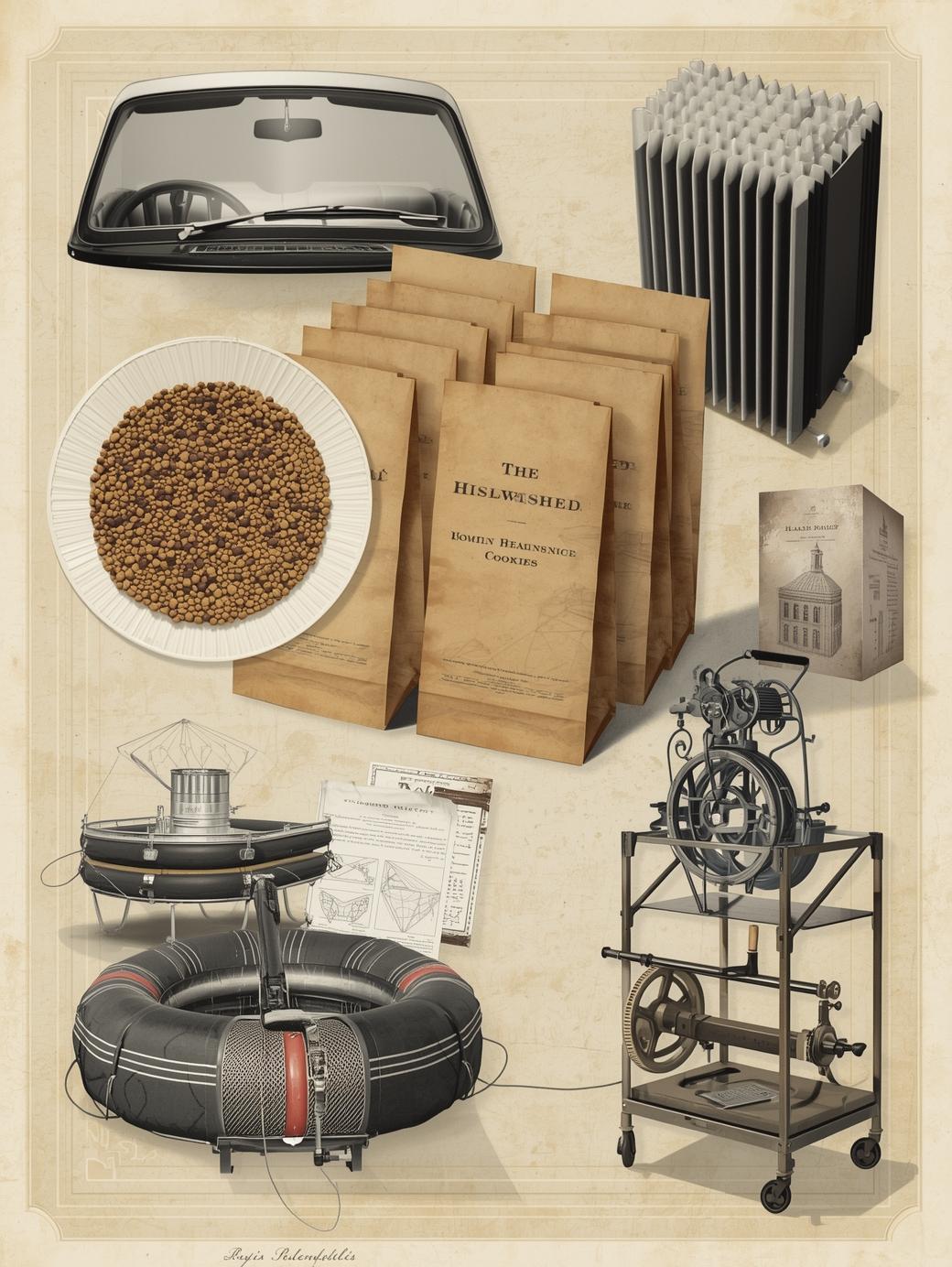
Many female inventors operated outside formal engineering institutions, yet their insights produced devices that transformed transportation, household labor, safety, and modern industry. The inventions discussed below illustrate how women contributed not merely to domestic conveniences but to technologies that underpin modern economic and social systems.
- Windshield Wipers
Inventor: Mary Anderson Patent: 1903
In the early twentieth century, the rapid expansion of automobile transportation created new engineering challenges. During a visit to New York City in 1902, Mary Anderson observed that streetcar drivers struggled to maintain visibility during snowstorms. Drivers were forced to open windows repeatedly to clear snow and ice from the windshield, exposing themselves to harsh weather and compromising passenger safety.
Anderson conceived a manually operated lever system connected to a rubber blade mounted on the exterior of the windshield. This mechanism allowed the driver to clear precipitation without leaving the vehicle. In 1903 she received a U.S. patent for the device.
Although automobile manufacturers initially dismissed the invention as unnecessary, windshield wipers became standard equipment within two decades. Today they are a critical safety feature on virtually every motor vehicle.
- The Mechanical Dishwasher
Inventor: Josephine Cochrane Patent: 1886
Josephine Cochrane’s invention emerged from both domestic frustration and engineering ingenuity. Living in Illinois during the late nineteenth century, Cochrane sought a method to wash delicate china more efficiently after repeated breakages by household staff.
Her solution was a machine that used pressurized water jets to clean dishes placed in wire compartments designed to hold specific plate and cup shapes. Unlike earlier experimental devices, Cochrane’s design relied on water pressure rather than manual scrubbing.
The invention won recognition at the 1893 World’s Columbian Exposition in Chicago. Over time, the design evolved into the modern automatic dishwasher, a device that significantly reduced the labor associated with household cleaning.
- The Flat-Bottom Paper Bag Machine
Inventor: Margaret E. Knight Patent: 1871
Margaret Knight is among the most prolific inventors of the nineteenth century. While working in a paper bag factory, she recognized that existing paper bags lacked structural stability because they did not have flat bottoms.
Knight designed a complex mechanical apparatus capable of folding and gluing paper in a manner that produced flat-bottom bags. This design allowed bags to stand upright and hold greater quantities of goods, making them highly suitable for retail commerce.
Her machine transformed packaging in the emerging consumer economy. Grocery stores and retailers widely adopted the design, which remains the structural basis for many modern paper bags.
- Central Heating System Innovations
Inventor: Alice H. Parker Patent: 1919
Alice H. Parker developed an innovative heating system that used natural gas as a fuel source. Her design introduced a concept resembling modern central heating: a network of ducts that distributed warm air throughout a building.
Prior heating systems relied heavily on fireplaces or coal-burning stoves placed in individual rooms. Parker’s design proposed a centralized furnace capable of heating multiple rooms more efficiently.
While the technology available at the time limited full implementation of her concept, Parker’s design anticipated key principles of modern central heating systems widely used today.
- Kevlar Fiber
Inventor: Stephanie Kwolek Discovery: 1965
Chemist Stephanie Kwolek made one of the most significant materials science discoveries of the twentieth century while working at DuPont. During research into lightweight fibers for automobile tires, she developed a polymer solution that produced an exceptionally strong synthetic fiber.
This material, later named Kevlar, is approximately five times stronger than steel by weight. Its properties made it invaluable for protective equipment such as bullet-resistant vests, helmets, and industrial safety gear.
Kevlar is also used in aerospace engineering, fiber optics, and structural materials. Kwolek’s discovery represents a major scientific breakthrough in polymer chemistry and materials engineering.
- Chocolate Chip Cookies
Inventor: Ruth Wakefield Creation: 1930s
Ruth Wakefield, proprietor of the Toll House Inn in Massachusetts, developed the chocolate chip cookie during the 1930s. Contrary to popular legend, she did not accidentally create the recipe but intentionally added chopped chocolate pieces to cookie dough.
The result was a distinctive dessert in which the chocolate softened without fully melting into the dough. The recipe became widely popular and was later printed on packages of Nestlé chocolate, ensuring its rapid dissemination.
Today the chocolate chip cookie is one of the most widely recognized baked goods in the world.
- Improved Life Raft Design
Inventor: Maria Beasley Patent: 1882
Maria Beasley designed an improved life raft that incorporated metal guard rails and buoyant materials intended to enhance passenger safety during maritime disasters.
Her design addressed a critical safety need at a time when ocean travel was becoming increasingly common. The raft provided greater stability and improved survival conditions for shipwreck victims.
Beasley also patented several other industrial devices, demonstrating the wide-ranging scope of her inventive activity.
- The Modern Bra
Inventor: Mary Phelps Jacob Patent: 1914
Mary Phelps Jacob developed an alternative to the rigid corsets commonly worn by women in the early twentieth century. Using silk handkerchiefs and ribbon, she created a lightweight undergarment that provided support without the restrictive structure of traditional corsetry.
Her design represented an important shift in clothing technology and social attitudes toward comfort and mobility in women’s fashion.
The invention eventually evolved into the modern brassiere industry.
- The Hand-Cranked Ice Cream Freezer
Inventor: Nancy Johnson Patent: 1843
Nancy Johnson patented a hand-cranked ice cream freezer that made it possible to produce frozen desserts more efficiently. The device used a rotating paddle inside a container surrounded by ice and salt, allowing the mixture to freeze evenly.
Johnson’s design significantly simplified ice cream production and allowed households and small businesses to produce the dessert without specialized industrial equipment.
The basic principles of her design remain present in many ice cream machines today.
- Early Computer Algorithms
Inventor: Ada Lovelace Contribution: 1840s
Ada Lovelace’s work on Charles Babbage’s Analytical Engine represents one of the earliest conceptualizations of computer programming. In her extensive notes on the machine, Lovelace described a method by which the device could calculate Bernoulli numbers through a sequence of operations.
These instructions are widely regarded as the first published computer algorithm. Lovelace also recognized that computing machines could potentially manipulate symbols and produce outputs beyond simple arithmetic.
Her insights anticipated modern computing concepts by nearly a century.
Conclusion
The history of technological innovation is incomplete without acknowledging the contributions of women. Many female inventors developed practical solutions to everyday problems, yet their achievements were frequently marginalized within traditional historical narratives.
By examining inventions ranging from transportation safety devices to advanced synthetic materials, it becomes clear that women have long played a vital role in shaping the technological infrastructure of modern life.
Digital research initiatives such as The She Archive seek to document these contributions and restore their place within the broader history of science, technology, and innovation.
References
References U.S. Patent Office historical records Lemelson Center for the Study of Invention and Innovation National Inventors Hall of Fame archives DuPont corporate historical materials Secondary scholarship on women inventors and technological history