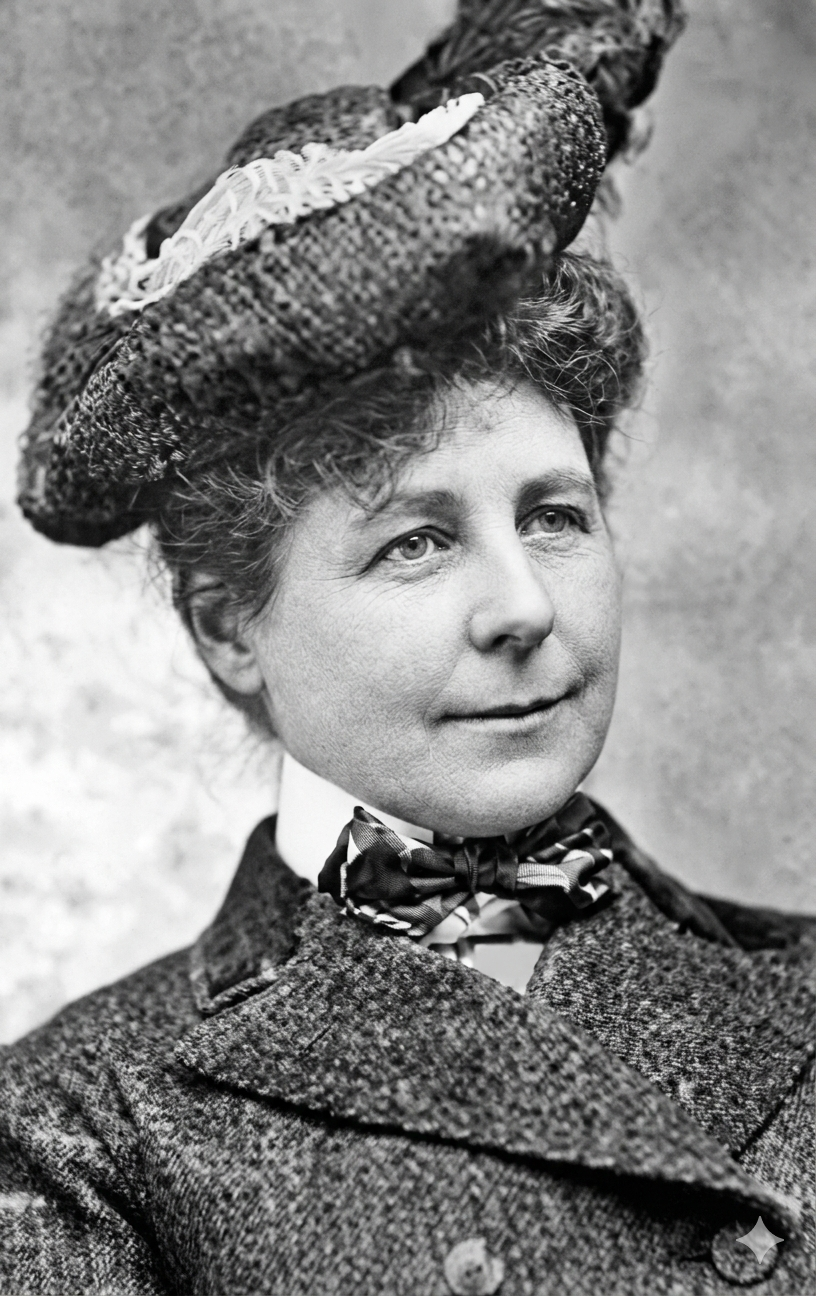
Modern transport depends on visibility. Movement depends on sight. Safety depends on clarity. Yet one of the most fundamental technologies that enables mobility across the world, from cars and buses to trains and heavy machinery, began with a woman whose name is rarely spoken.
In 1902, Mary Anderson witnessed a problem that no engineer, manufacturer, or transport authority had solved. While visiting New York City, she observed streetcar drivers forced to stop repeatedly during snowstorms to clear their windshields by hand. The glass would fog, ice would form, rain would blur vision, and movement would slow to a crawl. Urban transport systems were inefficient not because of engines, fuel, or infrastructure, but because drivers simply could not see.
Anderson understood something that industrial systems often miss: progress is not only driven by power, but by perception. Mobility is not just movement. It is controlled movement, safe movement, trusted movement.
She designed a mechanical device consisting of a swinging arm with a rubber blade that could be operated from inside the vehicle, allowing drivers to clear rain, snow, and debris from the windshield without stopping. In 1903, she patented the world’s first functional windshield wiper.
At the time, manufacturers dismissed her invention. Automakers claimed the device would distract drivers. Investors saw no market value. Engineers treated it as unnecessary. Her patent expired without commercial success. She made no fortune. She gained no institutional recognition.
And then the world adopted her idea anyway.
Within years, windshield wipers became standard on automobiles. Then trains. Then buses. Then trams. Then military vehicles. Then aircraft ground vehicles. Then industrial machinery. Today, no vehicle designed for transport exists without a visibility system descended from her design.
Mary Anderson did not just invent a tool. She enabled scale.
Mass transportation systems depend on reliability. Reliability depends on continuity. Continuity depends on weather resistance. Weather resistance depends on visibility. Visibility depends on her idea.
Her invention quietly transformed mobility from a fragile system into a continuous one. It allowed transport to function in rain, snow, dust, storms, and darkness. It turned vehicles into all-weather machines. It made cities faster. Logistics smoother. Emergency services safer. Supply chains more reliable.
Yet history rarely remembers her because her innovation was infrastructural, not glamorous. It did not look like a machine. It looked like a strip of rubber and a moving arm. But infrastructure innovations shape civilizations more than iconic inventions do.
Mary Anderson represents a pattern that repeats across women’s technological history: foundational systems built by women, normalized by industry, absorbed into daily life, and disconnected from their origin.
We remember the car.
We forget what makes the car usable.
We celebrate speed.
We erase the systems that make speed safe.
Transport history often centers engines, inventors, manufacturers, and industrialists. But mobility is not only mechanical. It is ecological, sensory, human, and environmental. It is about how bodies move through space without harm.
Anderson’s work sits at the intersection of technology and care. It is engineering rooted in human survival rather than industrial prestige.
Today, her invention operates invisibly across billions of journeys every day. People cross highways. Planes taxi in storms. Ambulances move through rain. Trains travel through snow. Buses cross flooded roads. Supply trucks operate in dust storms. All dependent on a visibility system designed by a woman whose name most drivers have never heard.
This is not a forgotten invention. It is an absorbed one.
And that is the most powerful form of erasure: when something becomes so essential that history no longer remembers it was ever created.
Mary Anderson did not invent speed.
She invented safety.
She did not invent transport.
She made transport survivable.
Her legacy is not a patent.
It is every journey that arrives intact.
References
United States Patent Office, Patent No. 743,801 (1903)
Smithsonian National Museum of American History archives
Lemelson Center for the Study of Invention and Innovation
Library of Congress historical patents archive
National Women’s History Museum